

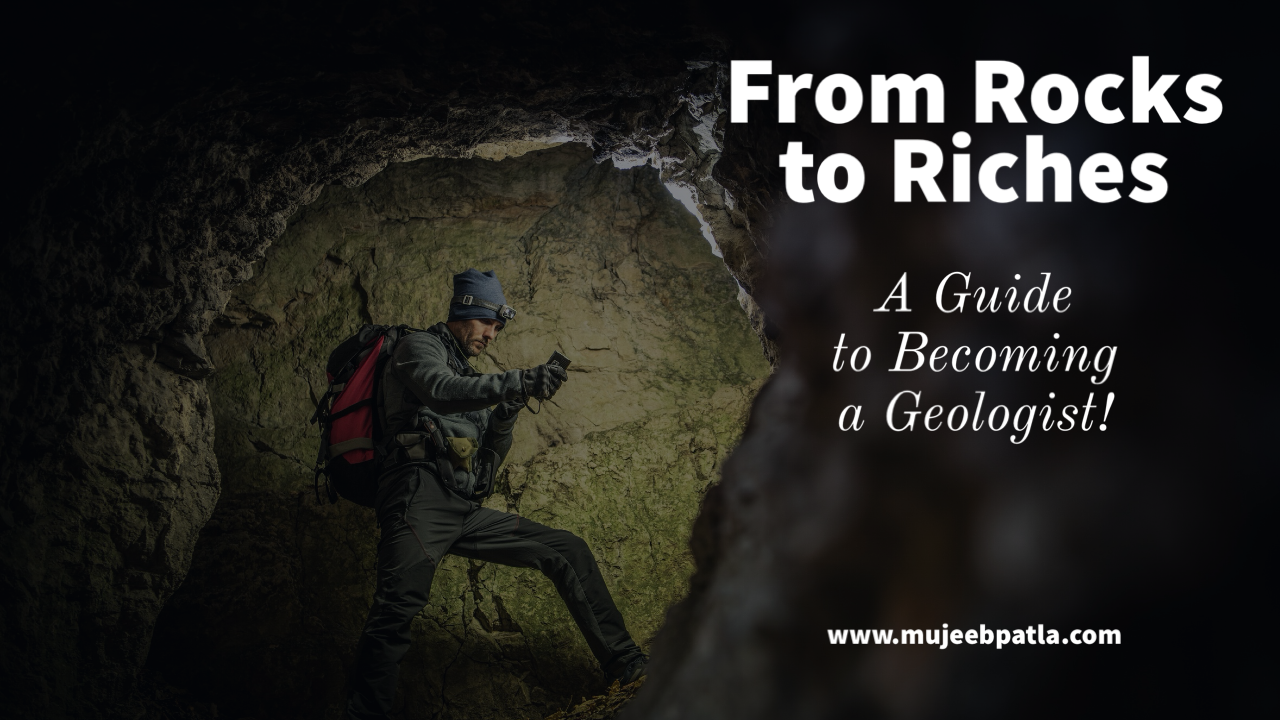
The field of geology, which explores the dynamic processes and intricate history of our planet, has garnered increasing interest and importance in our modern world. Geologists delve deep into the Earth’s mysteries and play a pivotal role in understanding natural resources, environmental challenges, and geological hazards. In this comprehensive guide, we will explore the steps to becoming a geologist, the latest career trends, education platforms, and job opportunities, and provide job data with a particular focus on the global scenario and the context of India.
Geologists are the scientific detectives of our planet, deciphering the stories written in rock layers, mineral deposits, and the Earth’s ever-changing surface. As the world grapples with pressing environmental concerns, resource exploration, and infrastructure development, the role of geologists in addressing these challenges becomes increasingly significant. From environmental geology, where they assess and mitigate environmental risks, to energy resource exploration and geotechnical engineering, geologists are at the forefront of ensuring a sustainable and resilient future for our planet.
In this guide, we will explore the educational journey to become a geologist, the emerging career trends that define the profession, the educational platforms available for aspiring geologists, and the diverse array of job opportunities that await them. We will also provide insightful job data, highlighting the global context and specific insights into the geology job landscape in India.
1. Education and Training:
a. Bachelor’s Degree: To become a geologist, you typically need at least a bachelor’s degree in geology or a related field such as earth sciences, environmental science, or geophysics. In India, universities like the Indian Institute of Technology (IITs), Indian Institutes of Science Education and Research (IISERs), and various other institutions offer undergraduate programs in these fields.
b. Master’s Degree: While a bachelor’s degree can get you entry-level positions, many geologists pursue a master’s degree (M.Sc. or M.Tech) to specialize in areas such as sedimentology, petrology, hydrogeology, or geophysics.
c. Ph.D.: Those interested in research or teaching at the university level often pursue a Ph.D. in geology.
2. Skill Development:
- Develop strong analytical and problem-solving skills.
- Gain proficiency in GIS (Geographic Information Systems) and remote sensing technologies.
- Learn to work with specialized software and tools used in geology.
3. Latest Career Trends:
1. Environmental Geology: In recent years, environmental concerns have taken center stage. Geologists are increasingly involved in assessing and addressing environmental issues. This trend includes activities such as groundwater contamination studies, monitoring soil and water quality, and evaluating the impact of climate change on various ecosystems. With the growing emphasis on sustainability, geologists in environmental roles play a crucial part in mitigating the environmental impact of human activities.
2. Energy Resources: The demand for energy resources, such as oil, natural gas, and minerals, remains high. Geologists are instrumental in locating and extracting these resources. With advancements in technology and the exploration of unconventional energy sources, geologists are integral to ensuring a steady energy supply, driving exploration and drilling operations in various parts of the world.
3. Geotechnical Engineering: Geologists are in demand for their expertise in assessing soil and rock conditions, which is crucial for infrastructure projects. They provide insights into the stability of the ground for building foundations, road construction, and dam design. Geotechnical engineers collaborate closely with civil engineers to ensure that construction projects are safe and structurally sound.
4. Geo-Information Technology: The utilization of Geographic Information Systems (GIS) and remote sensing technology is becoming increasingly vital in the field of geology. These technologies are employed for various purposes, such as mapping geological features, managing natural resources, and monitoring environmental changes. Geologists proficient in GIS and remote sensing can provide valuable insights for resource exploration, environmental management, and disaster monitoring.
5. Geological Education and Research: A consistent trend in the field is the pursuit of careers in academia and research. Geologists who are passionate about advancing the field, conducting in-depth research, and educating the next generation often opt for positions in universities, research institutions, and government agencies. They contribute to the expansion of knowledge and mentor future geologists.
These trends reflect the dynamic nature of the geology profession. Geologists are not confined to traditional roles; they are at the forefront of addressing contemporary challenges. As global awareness of environmental issues and the need for sustainable resource management continue to grow, geologists play a vital role in shaping the future of our planet.
Furthermore, geologists can adapt to emerging trends and technologies by staying updated on the latest developments in their field. This may involve ongoing education and training to remain competitive in the job market and provide valuable contributions to environmental protection, resource exploration, infrastructure development, and geological research.
4. Education Platforms:
In India, you can pursue geology-related education at various institutions, including:
- Indian Institutes of Technology (IITs)
- Indian Institutes of Science Education and Research (IISERs)
- National Institutes of Technology (NITs)
- Central and State Universities
- Private universities and institutions
5. Job Opportunities:
Global Job Opportunities:
- Environmental Geologists: The increasing focus on environmental conservation has created a strong demand for environmental geologists globally. They work on projects related to water quality assessment, soil contamination remediation, and environmental impact assessments. Job opportunities can be found in government agencies, environmental consulting firms, and non-profit organizations.
- Energy Sector: Geologists play a pivotal role in the energy sector, particularly in oil and natural gas exploration. Countries with significant energy reserves, like the United States, Canada, and Middle Eastern nations, offer abundant job opportunities for geologists in the energy industry. They assess and locate energy resources, manage drilling operations, and conduct reservoir modeling.
- Mining Industry: Geologists are essential in the mining sector, where they identify and evaluate mineral deposits. Regions with rich mineral resources, such as Australia, Canada, South Africa, and parts of South America, provide numerous job opportunities in this sector. Geologists are involved in exploration, resource estimation, and mine development.
- Research and Academia: For those interested in research and teaching, opportunities exist in universities and research institutions worldwide. Geologists in research roles investigate a wide range of geological phenomena, contributing to scientific knowledge. The availability of academic positions depends on factors like funding, institutional hiring needs, and the candidate’s qualifications.
- Consulting Firms: Environmental and geotechnical consulting firms are continually seeking geologists to conduct site assessments, remediation projects, and geological hazard evaluations. These firms operate globally, offering diverse job opportunities in various regions. Geologists in consulting roles work on projects related to infrastructure development, environmental impact assessments, and hazard mitigation.
- Government Geological Surveys: Many countries maintain geological survey agencies, like the United States Geological Survey (USGS) and the British Geological Survey (BGS). These agencies employ geologists for geological mapping, resource assessment, natural hazard monitoring, and scientific research.
Job Opportunities in India:
- Government Positions: The Geological Survey of India (GSI) is a major employer for geologists in India. It offers job positions related to geological mapping, mineral exploration, and environmental assessments. Additionally, state-level geological departments hire geologists for various roles, such as monitoring and resource assessment.
- Oil and Natural Gas Industry: Organizations like the Oil and Natural Gas Corporation (ONGC) in India offer geologists opportunities to work in oil and gas exploration and production. Given India’s growing energy demands, job prospects in this sector are significant.
- Mineral Exploration: India’s geological diversity and abundant mineral resources create numerous job opportunities in mineral exploration. Geologists are vital in identifying mineral deposits, conducting resource assessments, and improving extraction processes.
- Environmental Consulting: The expansion of environmental regulations in India has led to a growing demand for environmental consulting firms. Geologists specializing in environmental assessments, remediation, and compliance find job opportunities in these firms.
- Academia and Research: Various educational and research institutions in India, including the Indian Institutes of Technology (IITs), Indian Institutes of Science Education and Research (IISERs), and universities, offer positions for geologists in teaching and research roles. Academic job opportunities are available for those interested in contributing to the educational sector.
- Private Sector: Private companies involved in infrastructure development, construction, and mining often employ geologists for project evaluation and development. Geologists in the private sector contribute to the assessment of geological conditions, site suitability, and resource utilization.
In both the global and Indian contexts, job opportunities for geologists can vary depending on economic conditions, government policies, and industry trends. Geologists should stay informed about the evolving field, network within their industry, and consider internships or further education to enhance their job prospects. The field of geology continues to offer diverse and rewarding opportunities for those with the right education and skill set.
6. Job Data:
Global Scenario:
- Environmental Geologists: The demand for environmental geologists is on the rise globally. With increased awareness of environmental issues, these professionals are needed to assess soil and water quality, manage waste disposal, and monitor the impact of climate change. Employment opportunities can be found in government agencies, consulting firms, and non-governmental organizations (NGOs).
- Energy Sector: Geologists are critical in the energy sector, especially in oil and natural gas exploration. Employment in this sector often fluctuates with oil prices, but the long-term demand for geologists is stable. Many opportunities exist in countries with significant oil and gas reserves, such as the United States, Canada, and countries in the Middle East.
- Mining Industry: Geologists are essential for the mining industry, where they assess the quality and quantity of mineral deposits. Countries with rich mineral resources, including Australia, Canada, and parts of Africa and South America, offer extensive job opportunities in this sector.
- Research and Academia: For those inclined toward research and teaching, opportunities exist in universities and research institutions worldwide. The demand for geological researchers depends on funding availability and academic job markets.
- Consulting Firms: Environmental consulting firms are continually seeking geologists to conduct site assessments, remediation projects, and compliance monitoring. These firms operate globally, offering job opportunities in various regions.
- Government Geological Surveys: Many countries have their geological surveys, such as the United States Geological Survey (USGS). Government geological agencies offer opportunities for geologists to work on research, resource assessment, and hazard monitoring.
Indian Context:
- Government Positions: In India, the Geological Survey of India (GSI) is a significant employer of geologists. It offers positions for geologists involved in geological mapping, mineral exploration, and environmental studies. Additionally, state-level departments and agencies hire geologists for various roles.
- Oil and Natural Gas Industry: Organizations like the Oil and Natural Gas Corporation (ONGC) in India offer geologists opportunities to work in oil and gas exploration. India’s increasing demand for energy resources drives employment prospects in this sector.
- Mineral Exploration: Given India’s mineral-rich geological diversity, the mineral exploration sector offers numerous job openings. Geologists play an essential role in assessing mineral resources and optimizing extraction processes.
- Environmental Consulting: Environmental consulting firms in India are expanding rapidly due to increasing environmental regulations. Geologists specializing in environmental assessments and compliance are in demand.
- Academia and Research: In India, various educational and research institutions, including the Indian Institutes of Technology (IITs), Indian Institutes of Science Education and Research (IISERs), and universities, offer positions for geologists in teaching and research roles.
- Private Sector: Private companies involved in infrastructure projects, construction, and mining often hire geologists for project evaluation and development.
The job data for geologists varies depending on factors such as economic conditions, government policies, and the growth of various sectors. Geologists should stay updated on industry trends, network within their field, and consider internships to enhance their employability. The field of geology remains dynamic, offering a range of opportunities for those with the right education and skills, both in India and globally.
In conclusion, the path to becoming a geologist is a journey of scientific exploration, environmental stewardship, and resource management. Geologists hold the keys to unlocking the Earth’s secrets and addressing some of the most pressing challenges of our time. From the soaring demand for environmental expertise to the critical role in energy resource discovery and the vital contributions to infrastructure development, geologists are central to our world’s progress and sustainability.
As the global and Indian landscapes evolve, the demand for geologists continues to grow, making this field both exciting and promising for those embarking on this path. By pursuing the right education, developing essential skills, and staying attuned to the latest industry trends, aspiring geologists can carve out rewarding careers in a wide range of sectors, from government organizations and private companies to research institutions and academia.
In a world where the need for understanding the Earth’s processes and preserving its resources is paramount, geologists are the vanguards of knowledge and guardians of our planet’s future. Whether examining the intricate geology of a remote location or contributing to sustainable development practices in your own community, the journey of a geologist is one of endless discovery and meaningful impact.

 Mujeeb Patla™