

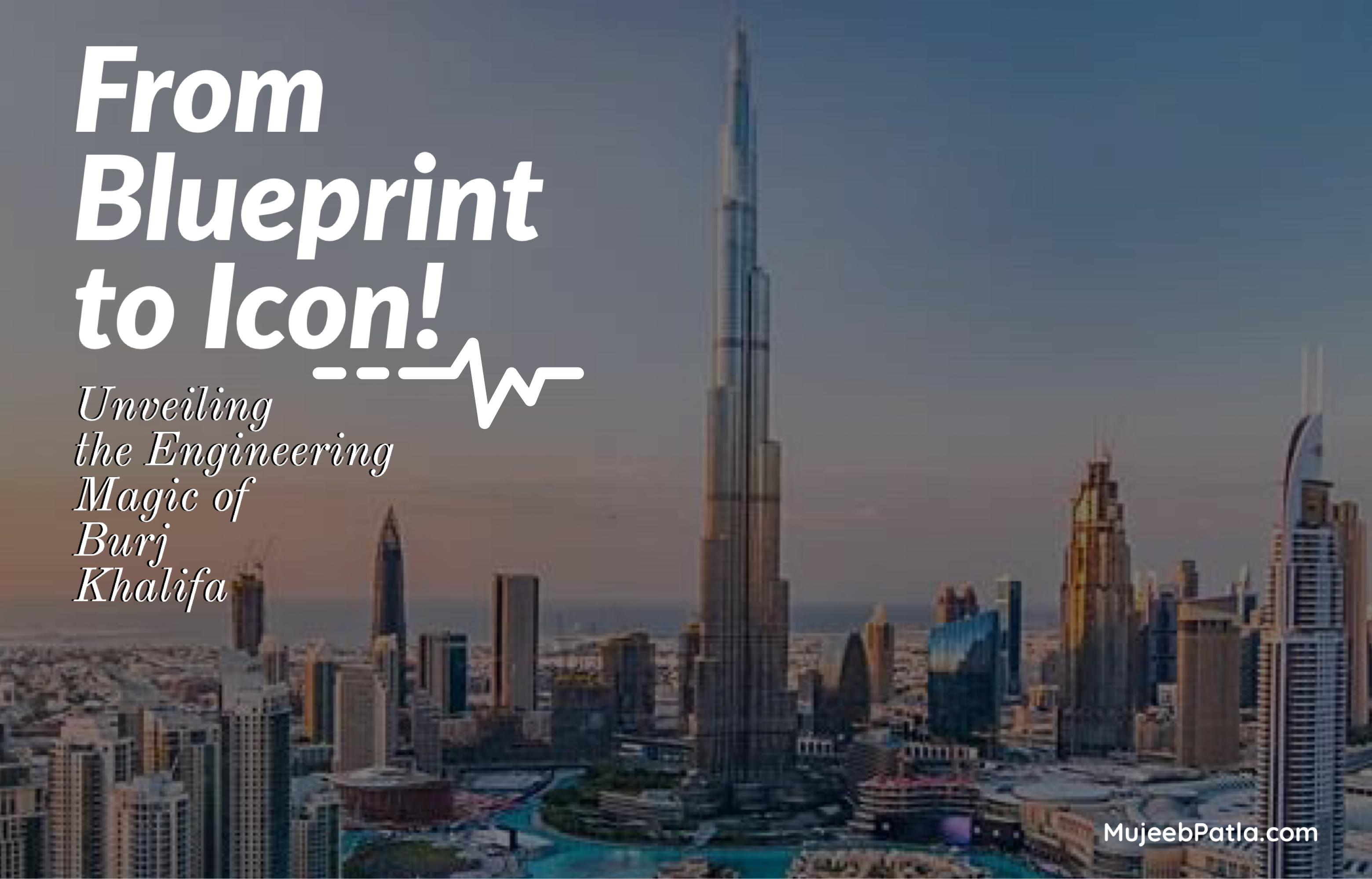
The construction of the Burj Khalifa relies on several fundamental engineering principles, showcasing the application of these principles on an unprecedented scale. Here are some of the key engineering principles used in the design and construction of the Burj Khalifa:
1. Structural Integrity:
- The “buttressed core” structural system, which includes a central core surrounded by wings, ensures the building’s stability and ability to withstand lateral forces such as wind and earthquakes. The massive concrete core provides strength and rigidity.
2. Load-Bearing Capacity:
- The foundation of the Burj Khalifa is designed to distribute the immense load of the structure efficiently to the ground. The use of barrette piles and a deep concrete mat ensures that the building can safely support its enormous weight.
3. Materials Science:
- High-quality concrete with a special mix was used to withstand the extreme temperatures of the region. Materials were selected based on their durability, strength, and resistance to corrosion.
4. Aerodynamics and Wind Engineering:
- The building’s notches and setbacks are strategically designed to disrupt wind patterns, reducing wind forces on the structure and preventing excessive sway. Wind tunnel testing and computational analysis played a crucial role in optimizing the building’s aerodynamic performance.
5. Elevator Technology:
- The high-speed elevators incorporate principles of mechanical engineering to efficiently transport people and minimize wait times. Their design accounts for factors like acceleration, deceleration, and safety.
6. Sustainability and Environmental Engineering:
- Sustainable design principles were applied to manage the extreme desert climate, including a water collection and recycling system, solar panels, and energy-efficient cooling systems. This showcases principles of environmental engineering and resource management.
7. Geotechnical Engineering:
- The knowledge of soil mechanics and geotechnical engineering was essential for ensuring the stability of the foundation in Dubai’s sandy desert terrain.
8. Lighting and Electrical Engineering:
- The LED lighting system on the Burj Khalifa involves electrical engineering principles to create mesmerizing light displays and patterns. Advanced electrical systems are also used for the building’s power distribution and safety.
9. Maintenance Engineering:
- Designing systems for maintenance and cleaning at extreme heights demonstrates principles of maintenance engineering, ensuring the long-term sustainability and safety of the structure.
10. Construction Efficiency: – The rapid construction pace of the Burj Khalifa exemplifies principles of project management and construction engineering, emphasizing efficiency, organization, and precision in the construction process.
These fundamental engineering principles, among others, were the building blocks that allowed the Burj Khalifa to become not only the tallest structure in the world but also a shining example of human engineering ingenuity. The integration of these principles ensured the safety, functionality, and sustainability of this iconic skyscraper.
Suggested Further Reading & References:
- Books:
- “The Burj Khalifa: The Tallest Building in the World” by Todd Reisz
- “Building the Burj Khalifa” by George Efstathiou and Glenn Berghauser
- Academic Journals:
- Search for relevant engineering and architectural journals that may have published articles on the Burj Khalifa’s construction and design.
- Architectural and Engineering Websites:
- The official website of the Burj Khalifa often provides detailed information about its architecture and engineering aspects.
- Websites of engineering firms and architectural organizations that were involved in the project may also have valuable insights.
- Documentaries and Interviews:
- Documentaries and interviews with the architects, engineers, and builders of the Burj Khalifa can provide firsthand information about its engineering achievements.

 Mujeeb Patla™